Getting here and around
PERTH AIRPORT Perth Airport is located 13km east of the city centre. Terminals 1 and 2 are located on Airport Drive, accessed via Tonkin Highway 35 minutes from the CBD. Terminals 3 and 4 are accessed via Great Eastern or Tonkin Highways 25 minutes from the CBD. Public transport (trains and buses), taxis and ride share services operate to and from the CBD.
Virgin Australia's interstate services are located at T1’s domestic pier and most of their regional services are located at T2. T3 is home to Jetstar’s interstate and regional services and T4 is home to Qantas international, interstate and regional services. All other international flights operate from T1. Check your itinerary carefully or contact your airline to ensure you go to the correct terminal. A free shuttle bus service operates between T1/T2 and T3/T4 seven days a week, 24 hours a day. The journey takes approximately 10 minutes. A free bus service connects the airport car parks with the terminals.
RAIL & COACH The Indian Pacific, Australia’s famous transcontinental rail journey, arrives and departs regularly from the East Perth Rail Terminal.
Transwa operates regional rail and coach services to approximately
240 destinations in WA arriving and departing from either the East Perth Rail Terminal or the Perth Railway Station.
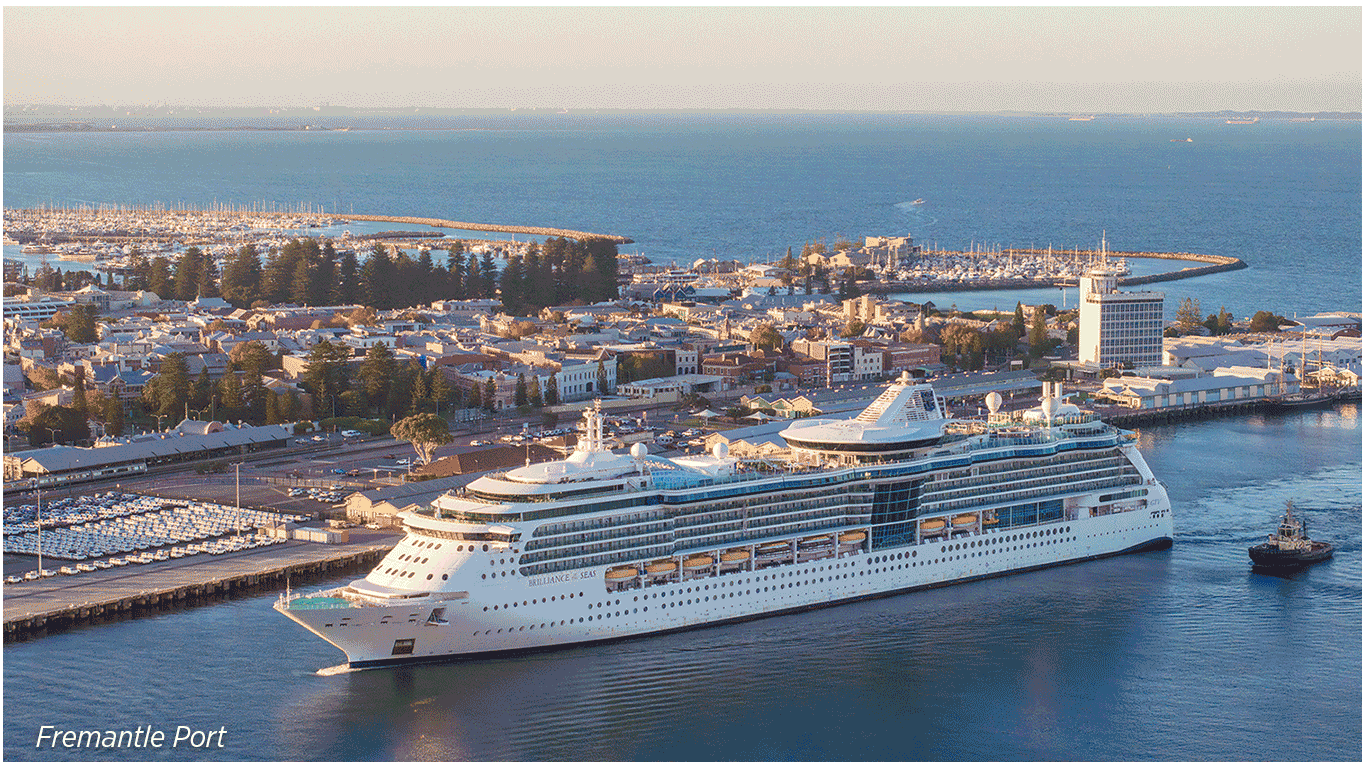
CRUISE SHIPS Fremantle Ports’ Passenger Terminal is located on the Victoria Quay waterfront in Fremantle. The heritage-listed terminal building was constructed to cater for the large number of passenger ships bringing migrants to Australia. The terminal is easily reached by walking about 250m from the Fremantle railway station.
DRIVING In Australia we drive on the left hand side of the road. Seat belts must, by law, be worn by all persons travelling in a motor vehicle. Posted speed limits must be adhered to. The speed limit in Perth city and suburbs is 50km/hr unless otherwise signed; major arterial roads are generally 60km/hr and the upper limit in country areas is 110km/hr. The maximum speed for towing a vehicle is 100 km/h. Speed cameras are used throughout the state.
Western Australia has drink driving laws (the blood alcohol limit in WA is 0.05%) as well as laws against the use of drugs that impair driver skills such as cannabis, amphetamines and ecstasy. These laws are rigidly enforced by an efficient police force equipped with modern radar devices and mobile alcohol and drug detection facilities.
In Australia it is illegal to use a mobile phone whilst driving as distracted drivers can be dangerous. Use a hands-free phone if you have to take a call or, better still, pull over and stop the car.
ROAD SIGNS In Australia distances on road signs are indicated in kilometres. Roads through areas of significant historic or scenic interest are indicated by white on brown Tourist Drive markers.
RENTAL CARS WA has a range of rental vehicles at competitive rates. You will need a valid Australian or international drivers license (in English).
PETROL Many service stations in Perth are open 24 hours a day, 7 days a week and most stock unleaded fuel and diesel. If you are travelling to the country, it is advisable to check how far you are likely to drive between petrol stations, as they can be up to 500km apart.
ELECTRIC VEHICLE CHARGING STATIONS There are hundreds of public EV charging stations across Perth including in carparks, accommodation venues and shopping centres. Australia's 7,000km network of EV charging stations gives drivers access to 100 fast and ultra-fast charging points across 49 locations from Eucla to Kununurra.
OUTBACK DRIVING Outback roads are often gravel or dirt which may have loose or corrugated surfaces. It is recommended you travel at a reduced speed, leave extra distance from any vehicles in front and don't brake suddenly. Dust on unsealed roads can obscure vision; it is advisable to reduce your speed or stop and wait for the dust to clear.
As many roads are unfenced, wildlife can be a hazard to drivers and particular care must be taken at dawn and dusk. If you are driving a rented vehicle ensure your agreement permits its use on unsealed roads.
Road trains (large trucks towing up to 3 trailers) can be over 50 metres long and 2.5 metres wide so extra care should be taken when overtaking; allow for at least a kilometre of clear road ahead.
When planning a route through isolated outback areas make sure you carry plenty of water (at least 5 litres of water per person per day) and adequate food and fuel supplies. Advise someone of your route, destination and expected arrival time. If you have a breakdown do not leave the vehicle under any circumstances.
DRIVER FATIGUE Drivers are most at risk of fatigue between midnight and 6am when alertness is at its lowest point. Tiredness can affect you on short journeys as well as on long, straight country roads. So if you feel yourself getting tired, stop and take a break. At participating roadhouses throughout Western Australia you'll find coffee stops where drivers receive a free cup of coffee. During peak travel periods such as Christmas and school holidays Driver Reviver stations around the state offer refreshments to encourage drivers to stop, revive and survive.
TRAVELLING THROUGH ABORIGINAL LANDS There are some simple rules that travellers and visitors should take into consideration when entering or passing through Indigenous communities. Please remember you are guests of the traditional custodians. Do introduce yourself on arrival if you are staying, and don’t drive around the area or reserve without the community’s knowledge and permission. If you want to take photographs or film the local people make sure you ask first, and don’t attend ceremonies or meetings without an invitation. To learn more about the Indigenous people of Australia, or to find out how you can immerse yourself in their culture, contact the WA Indigenous Tourism Operators Committee (WAITOC), a not-for-profit organisation promoting authentic Indigenous tourism ventures. Permission to visit remote Aboriginal communities is granted through the Aboriginal Lands Trust at the Department of Planning, Lands and Heritage. Visit www.dplh.wa.gov.au